GPS
-33.3080, 25.5425
Lead Partner(s)
UNEP
Biome
Thicket
Hectares
~180,000 ha (land) + 120,000 ha Marine Protected Area
Land Use (%)
Mostly natural
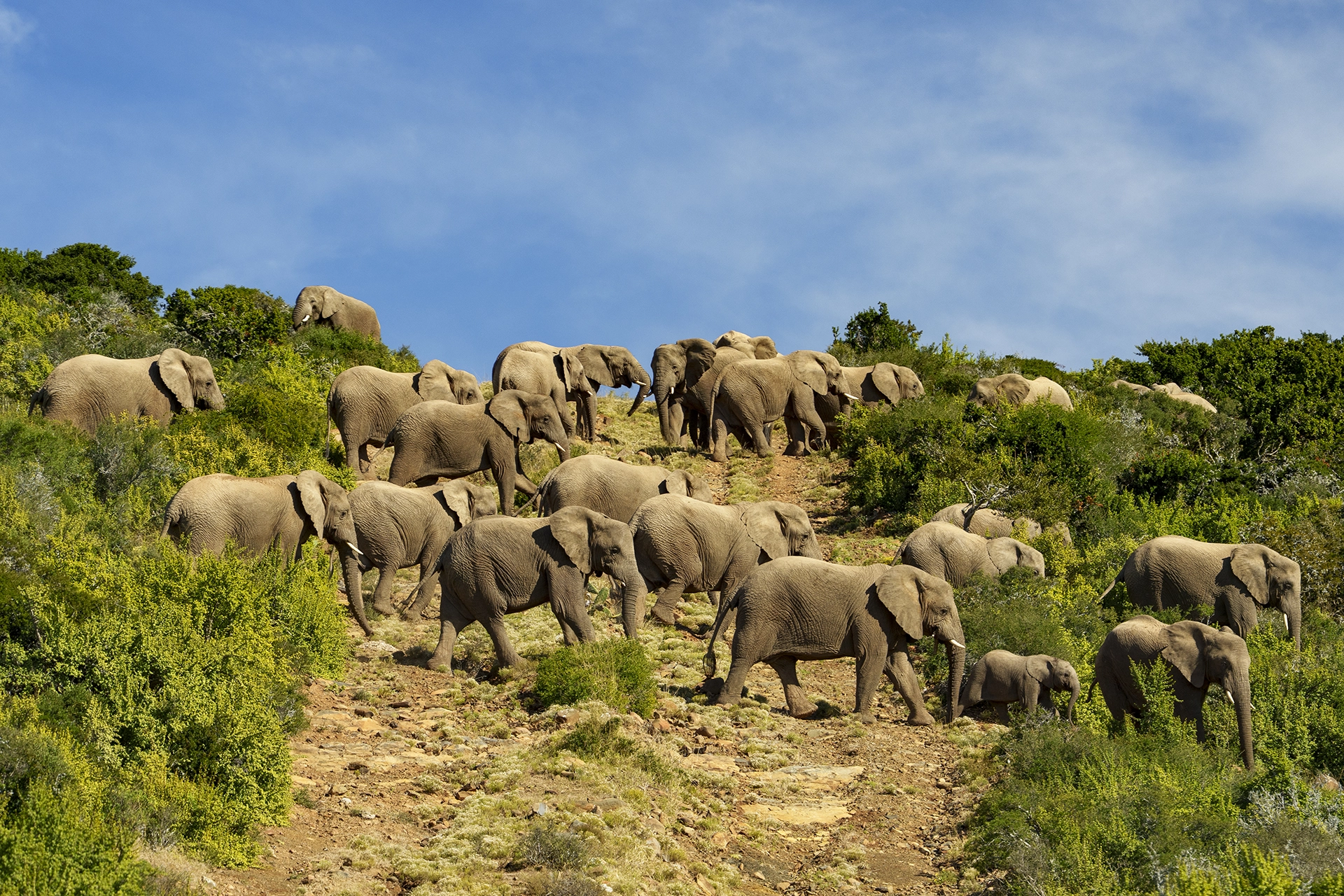
Addo is globally renowned for its biodiversity, iconic elephant herds, and marine protected area. Its thicket ecosystems play a vital role in carbon storage and soil protection but have been degraded by overgrazing and erosion. Restoration focuses on large-scale spekboom planting, soil recovery, and thicket regeneration. Investment opportunities include carbon credits, eco-tourism, and marine biodiversity markets. Addo’s restoration demonstrates how ecological recovery can align with global climate goals while supporting jobs in conservation.
GPS
-33.3080, 25.5425
Lead Partner(s)
UNEP
Biome
Thicket
Hectares
~180,000 ha (land) + 120,000 ha Marine Protected Area
Land Use (%)
Mostly natural
People/Households
Dependent
Local farmworkers, tourism
Protected
Areas (%)
Land ~100% protected; MPA added 2019
Ecosystem
Services
Biodiversity habitat, carbon, soils
Strategic Water
Source
Yes
Degradation
Challenges
Overgrazing, erosion
Restoration Actions
Spekboom planting, thicket regen
Economic Opportunities
Carbon credits, eco-tourism
SDG Links
SDG 8, 14, 15, 13, 6
Investment Potential
Thicket carbon, marine biodiversity credits
Heritage Sites
None (though a WHS nomination possible in future)