GPS
-29.4658, 29.2669
Lead Partner(s)
EWT
Biome
Grassland
Hectares
~1,000,000 ha
Land Use (%)
Montane grassland
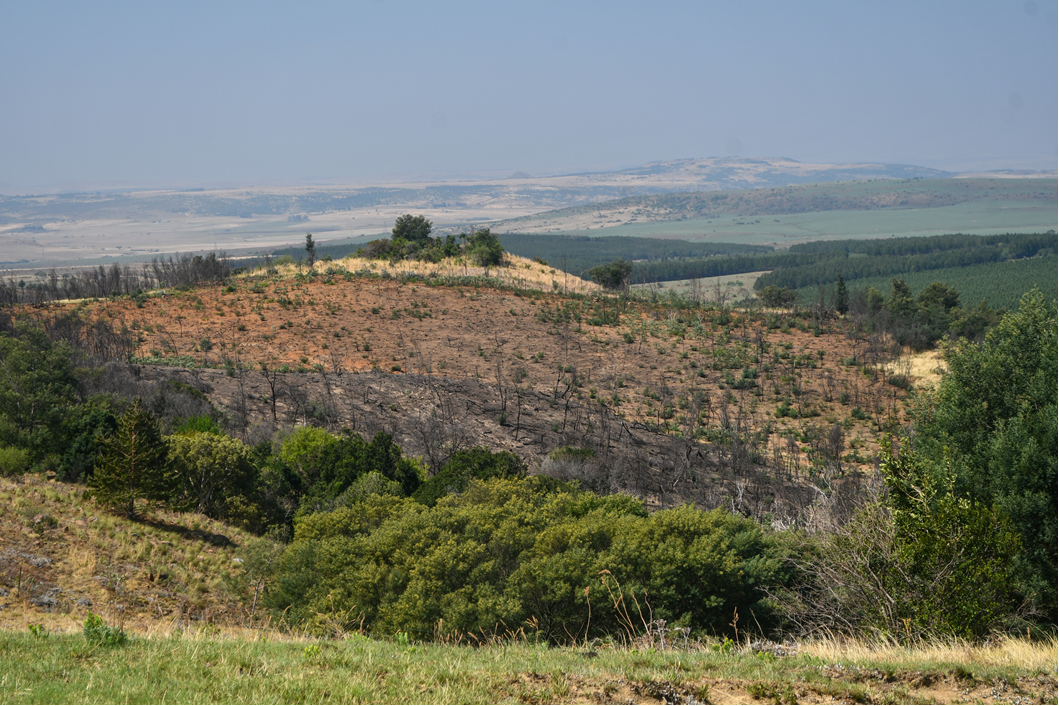
The Northern Drakensberg Strategic Water Source Area (SWSA) forms part of the upper uThukela River catchment and is one of South Africa’s most important water-producing landscapes. The region supplies water to communities, agriculture, industry and major national transfer schemes, while supporting extensive grasslands, biodiversity-rich mountain ecosystems, and the livelihoods of local communities.
Although more than 80% of the landscape remains in a natural or near-natural state, increasing pressures from invasive alien plants, unsustainable land management practices, mining, urban expansion and climate change are placing growing strain on the ecosystems that underpin water security and rural livelihoods. Through the ReLISA Programme, partners are working to restore degraded landscapes, strengthen catchment governance, and explore innovative financing mechanisms that can support long-term conservation and sustainable land management across the Northern Drakensberg.
The Northern Drakensberg is part of South Africa’s Strategic Water Source Area network – a group of landscapes that generate a disproportionate share of the country’s surface water. The upper uThukela catchment feeds major rivers, dams and transfer schemes that support millions of people and contribute significantly to national water security.
The landscape is also characterised by extensive montane grasslands that provide critical ecosystem services. These grasslands regulate water flows, reduce erosion and sedimentation, store carbon, support biodiversity, and sustain livestock production across the region. Together with protected areas such as the uKhahlamba-Drakensberg World Heritage Site and Golden Gate Highlands National Park, they form an ecological corridor of national importance.
Despite its strategic importance, the Northern Drakensberg faces a number of interconnected environmental challenges that threaten the ecological integrity of the catchment and the ecosystem services upon which people, economies and nature depend:
To address these challenges, ReLISA partners are implementing complementary initiatives that restore ecosystem function, strengthen landscape governance, and unlock sustainable financing for long-term conservation.
The uThukela Water Fund initiative is expanding investment in nature-based solutions that improve water security and ecosystem resilience. Building on an existing Water Fund model, the project is supporting the establishment of governance structures, operational frameworks and implementation plans that will enable restoration activities to scale across priority areas of the Northern Drakensberg. Planned interventions include invasive alien plant clearing, sustainable rangeland management and erosion control, creating lasting benefits for both upstream ecosystems and downstream water users.
Led by the Endangered Wildlife Trust (EWT), this initiative focuses on restoring degraded grasslands through invasive alien plant clearing, improved grazing management, biodiversity stewardship and protected area expansion. Early restoration efforts have already cleared more than 44 hectares of invasive wattle infestations, with encouraging signs of natural grassland recovery and improved grazing potential. Through a Small Grants Programme developed with UNDP, land users will also receive technical support, equipment and training to accelerate restoration efforts across the landscape.
The Northern Drakensberg Carbon Project is exploring how carbon finance can support large-scale grassland restoration and sustainable agricultural management across approximately 585,000 hectares. Following the completion of a pre-feasibility assessment, the project is progressing into a full feasibility phase that will further investigate soil carbon potential, project design and long-term financial viability. Beyond carbon benefits, the initiative seeks to strengthen biodiversity conservation, water security and climate resilience while supporting the long-term sustainability of the proposed Northern Drakensberg Biosphere Reserve.
The Northern Drakensberg portfolio is implemented through collaboration between local communities, government institutions, conservation organisations and technical partners.
Key partners include:
GPS
-29.4658, 29.2669
Lead Partner(s)
EWT
Biome
Grassland
Hectares
~1,000,000 ha
Land Use (%)
Montane grassland
People/Households
Dependent
~369,370
Protected
Areas (%)
~10% protected
Ecosystem
Services
Water supply, carbon storage, soil stabilization
Strategic Water
Source
Yes
Degradation
Challenges
Erosion, overgrazing, invasives
Restoration Actions
Grass reseeding, alien clearing, grazing management
Economic Opportunities
Water funds, jobs, eco-tourism
SDG Links
SDG 6, 13, 15, 2, 7
Investment Potential
PES, water fund, grassland carbon
Heritage Sites
uKhahlamba Drakensberg Park WHS (Cultural & Natural)